Our solution
A drone that saves time,
an AI that learns with every flight.
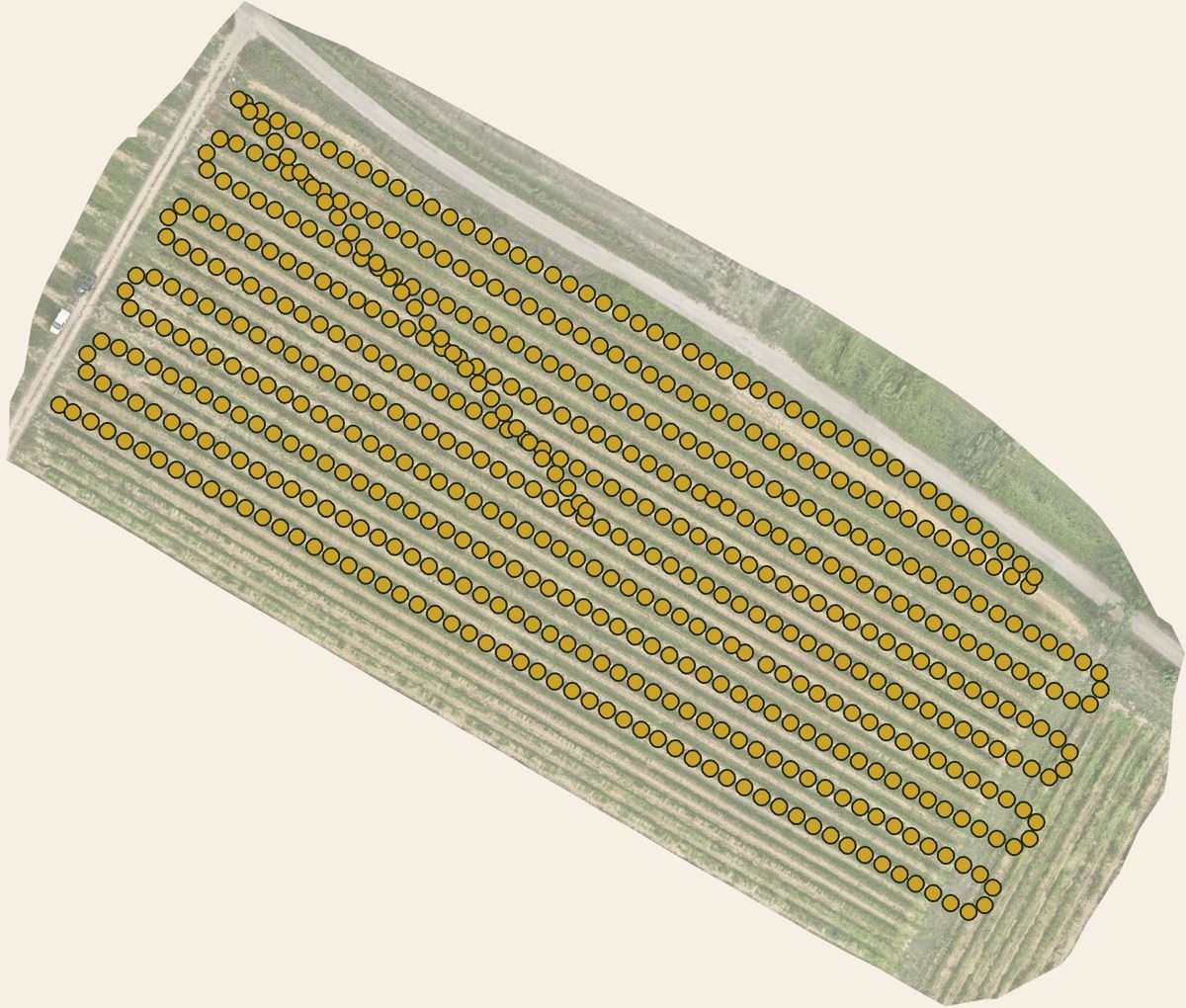
A drone carrying a multispectral camera flies over each plot every month. Artificial intelligence compares the flights and flags the areas to inspect. The winegrower checks on the ground, and the model learns.
What we look for
Four targets
Downy mildew
After rain, the foliage loses vigour in patches. Our first results are solid.
Powdery mildew
A whitish film on the leaves, still hard to see from above. We are still working on it.
Flavescence dorée
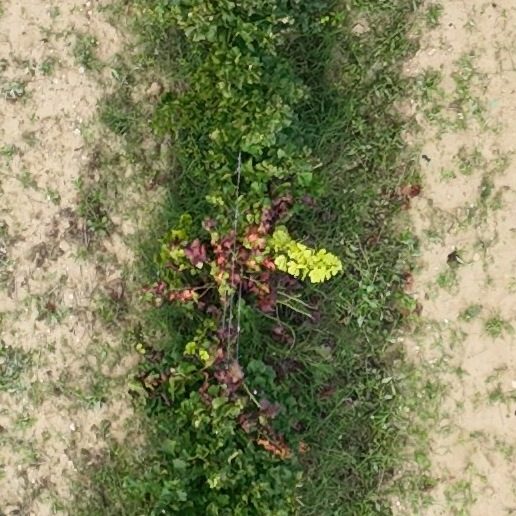
A quarantine disease: red or yellow foliage in autumn, vine by vine. The drone already finds where the disease is concentrated.
Missing vines
Every empty position spotted, row by row, to plan replanting.
The method
From the map to the field, in eight steps
- Map each plotA map stitched together from hundreds of photos, at 2 cm per pixel: every vine is visible.
- Plan around the disease calendarDowny and powdery mildew from May to September, flavescence dorée in September and October.
- Declare every flightTo the civil aviation authority, the Luberon Regional Nature Park, landowners and neighbours, and the local prefecture when required.
- Fly every monthAt the same time of day and the same height: repetition is what reveals change.
- Rebuild the plotHundreds of shots stitched into a single GPS-referenced image, readable down to the leaf.
- Measure the light reflected by the vinesIncluding light the eye cannot see: red-edge and near infrared.
- Learn, flight after flightArtificial intelligence compares each section of row with the rest of the plot and with previous flights.
- Deliver a hotspot map, then check on the groundAround twenty ranked alerts with their GPS coordinates, locked before any ground check: nothing can be corrected after the fact.
Vegetation indices
Three ways of looking at a leaf
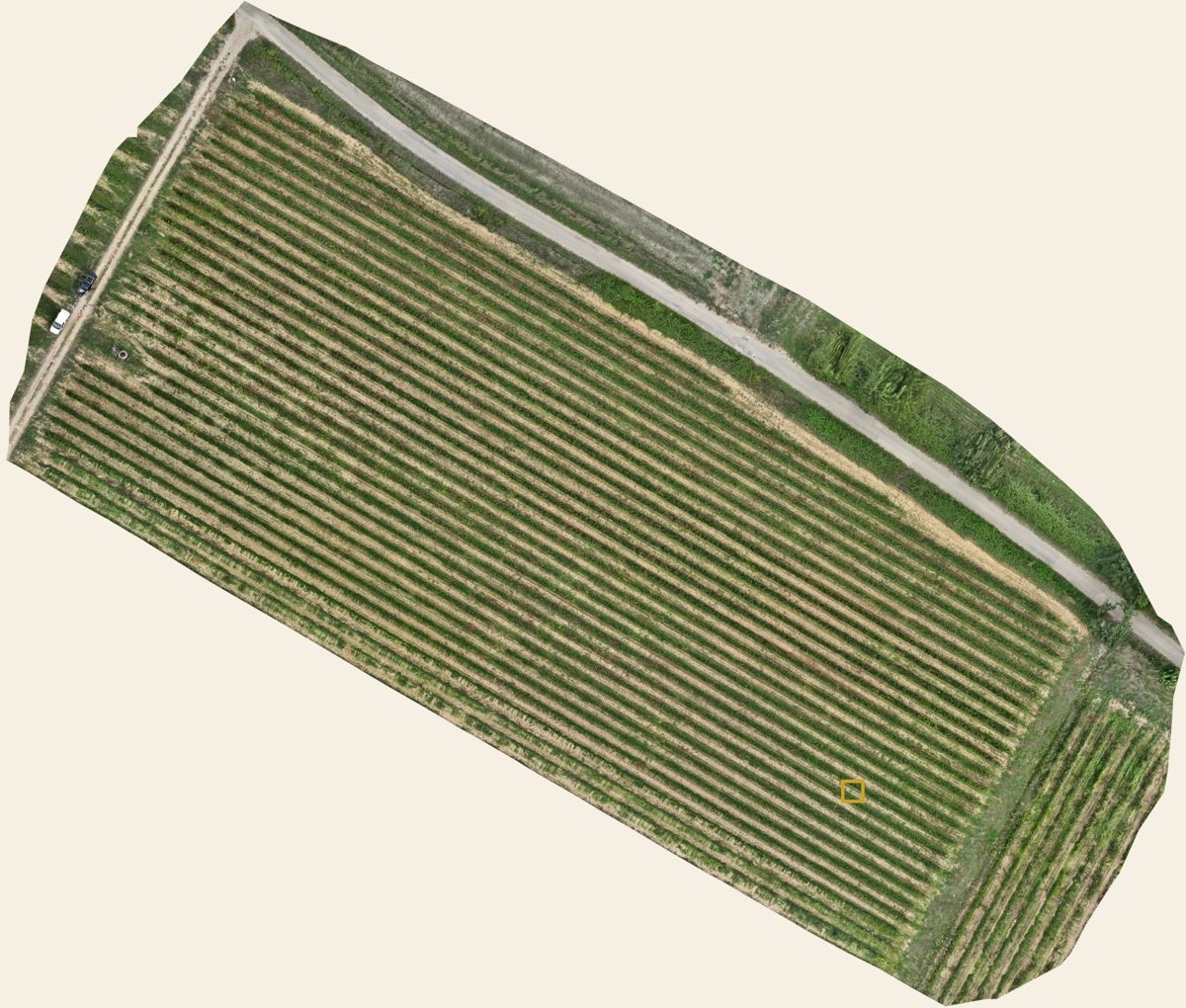
A healthy leaf absorbs red light and strongly reflects infrared. A stressed leaf does the opposite. The drone measures that change.
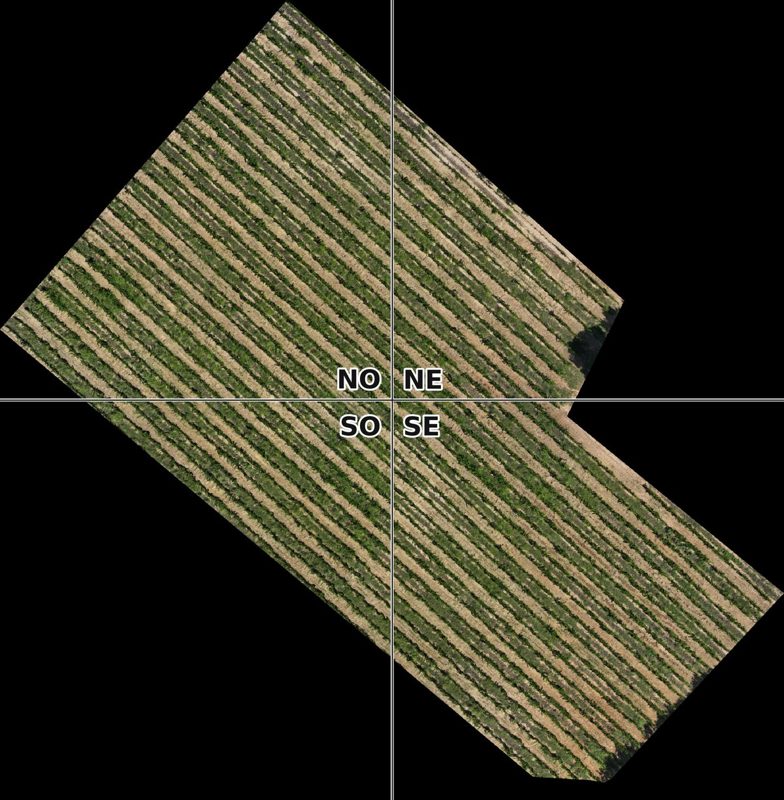
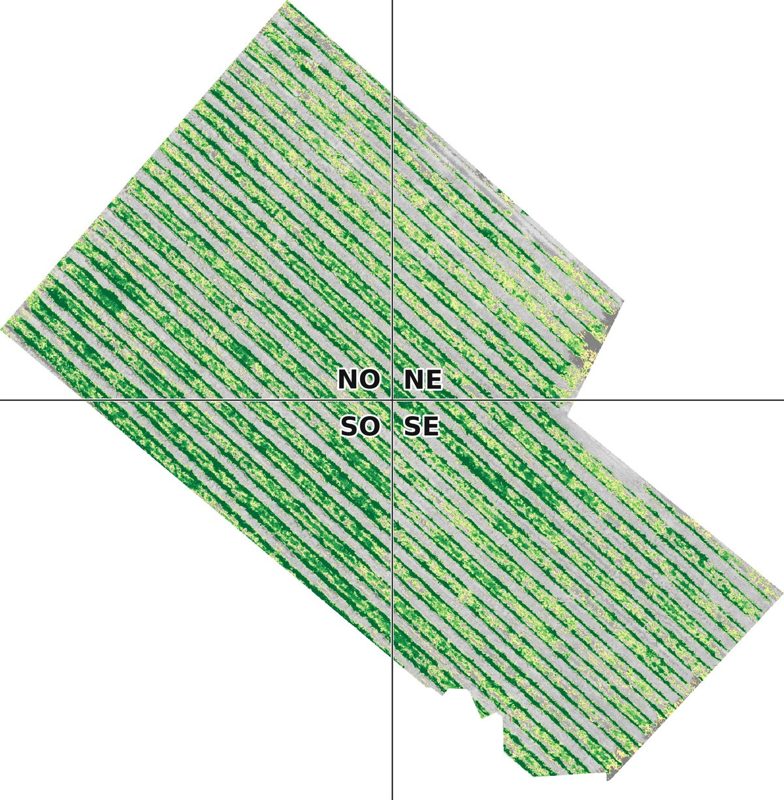
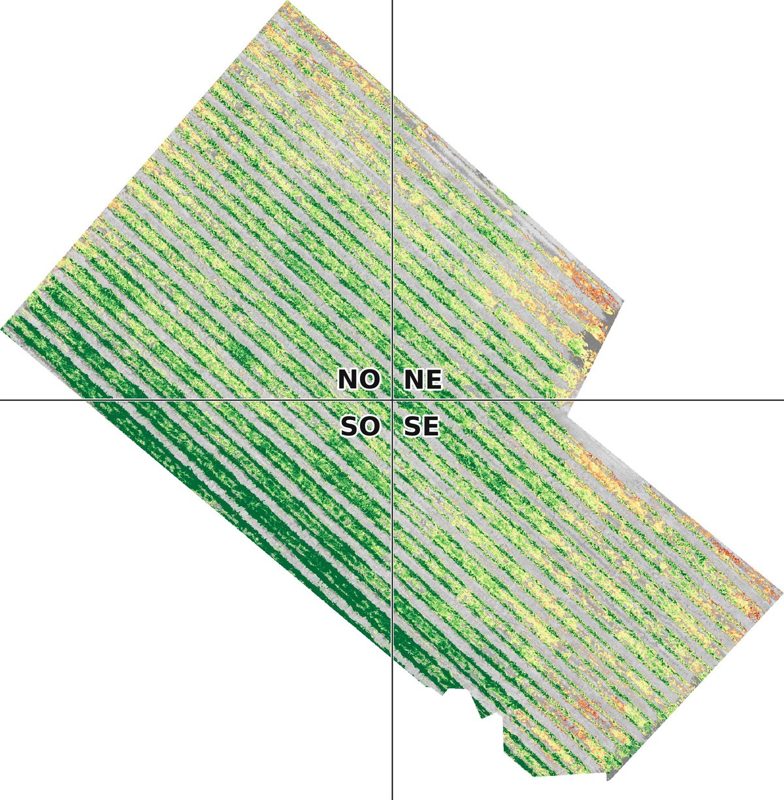
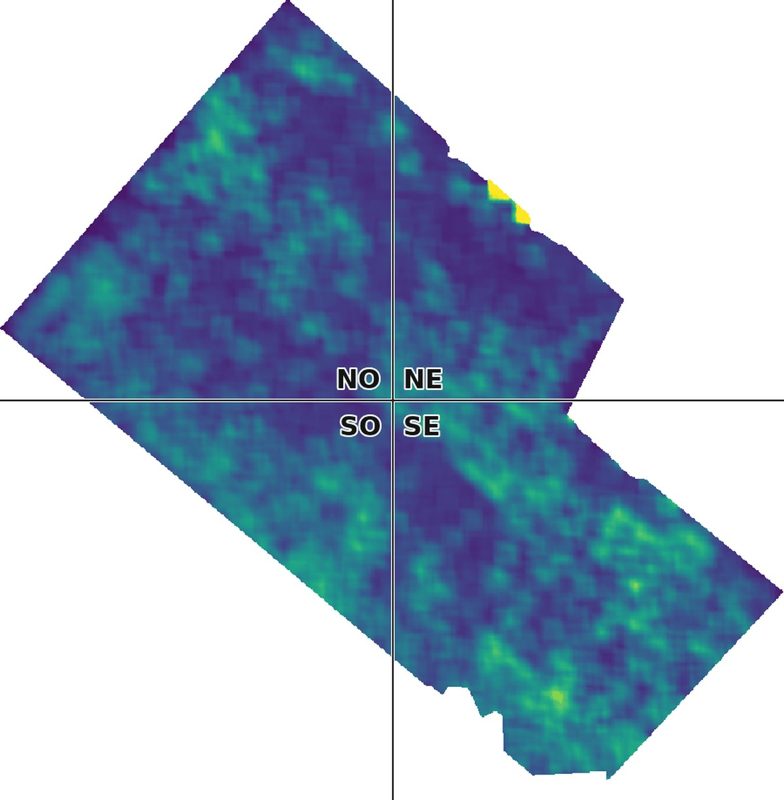
Grenache noir, flight of 24 August 2026. Seen through NDVI, the vines look uniform; seen through NDRE, the difference between areas is four times larger.
What you receive
Simple, transparent, over time
A simple tool
A map, a list, a file on your phone. Nothing to install, nothing to learn.
Transparency
Alert lists locked before any ground check, and methods open to plant health organisations.
A memory of each plot
The same plots from one year to the next, to follow how hotspots evolve.
Next
Drone treatment, of the hotspot only
Detect a hotspot, then treat that hotspot and nothing else, with sulphur and copper approved for organic farming. The drone goes where a tractor cannot: waterlogged soil, slopes, terraces.
The aim: less product, no soil compaction, no fuel, less exposure for the operator. Together with winegrowers and institutions, we are applying for an experimental authorisation for the 2027 season in the Luberon.
A door ajar
2009 · In Europe, aerial spraying is banned in principle, drones included.
2026 · Allowed in France under conditions: vineyards on slopes of 20% or more, organic, biocontrol or low-risk products.
Next · The rules provide for supervised trials. That is the door we want to open, together.
We are starting with vines
Tomorrow, the same method will serve other crops.